
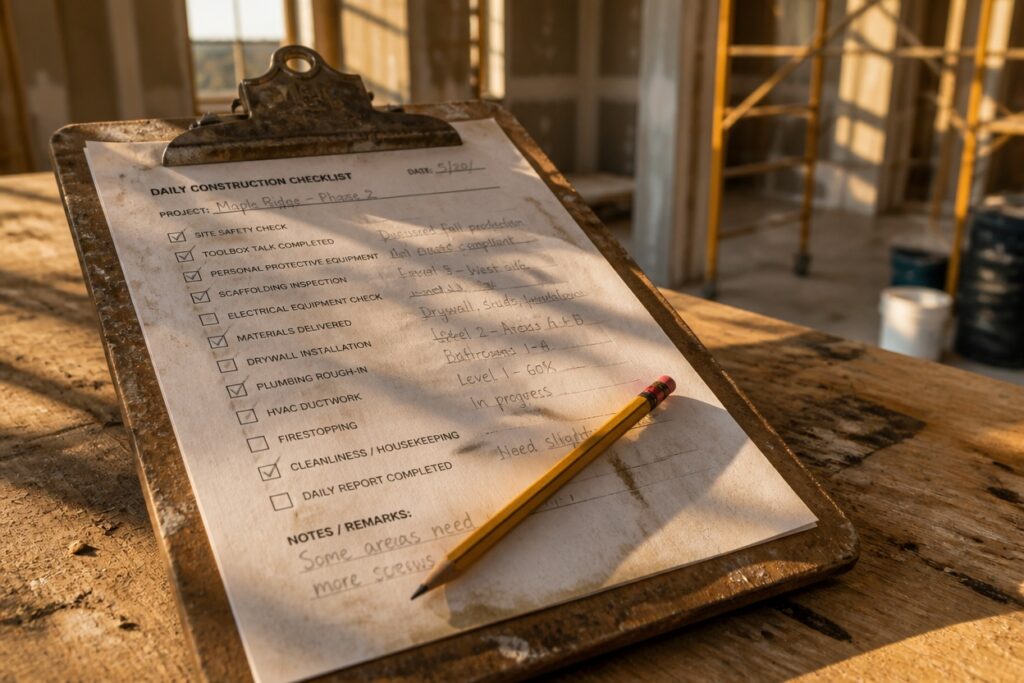
A construction punch list is basically your project’s final to-do list. It tracks all those little (and sometimes not-so-little) things that still need fixing before you can truly call a project done.
Think scratches in the hardwood, paint touch-ups, or a sticky door that just won’t close right.
You’ll usually walk through the space with your contractor near the end of the project. Together, you’ll note anything that doesn’t meet your standards or the original plans.
This walkthrough helps everyone get on the same page about what “finished” actually means.
Having everything in writing protects both sides. It keeps final payments fair and gives you clear documentation if questions come up later.
Most importantly, it means you can move into a space that actually feels complete.
What Belongs on Your Punch List
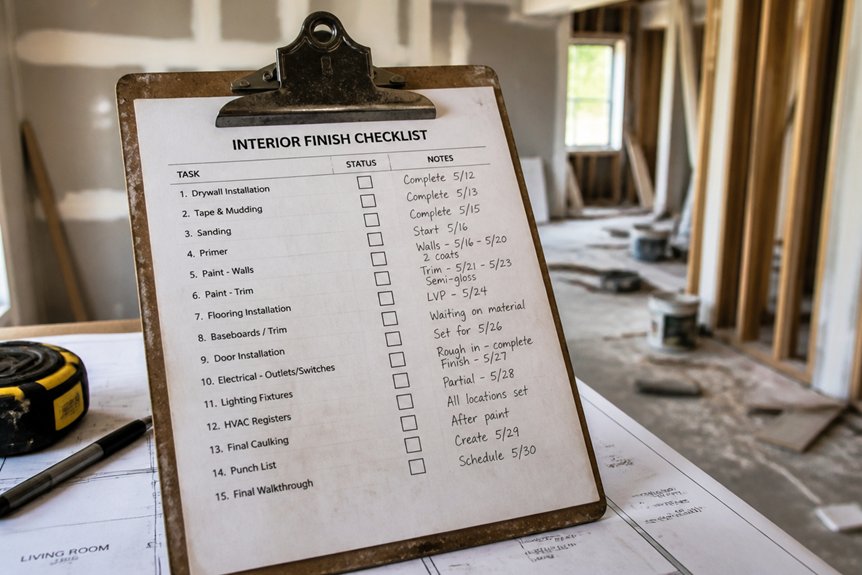
A construction punch list tracks work that still needs fixing. It covers incomplete or defective items before you call a project done.
Common items include unfinished paint, missing trim, and faulty outlets. Flooring that isn’t fully installed belongs here too.
Cosmetic issues matter just as much. Watch for scratches on surfaces, dust buildup, and gaps in caulking.
Functional problems need documentation. Doors that stick, leaky faucets, and HVAC failures all count.
Check hardware closely. Broken hinges and missing handles should make the list.
Cover both interior and exterior spaces. This ensures nothing slips through the cracks.
Contractors work through items one by one. Owners verify each fix before releasing final payment and signing off.
Who’s Responsible: And When to Start?
Who’s Responsible: And When to Start?
The punch list process usually starts during the final construction stages. The general contractor kicks it off as the project nears substantial completion.
The contractor, project manager, and owner work together on this step. They spot remaining tasks, defects, or anything left unfinished. This happens after the main construction wraps up but before the project officially ends.
The contractor holds the main duty for finishing punch list items. They need to stick to agreed timelines and keep things moving.
Owners play a key part too. They should look over the list with care. Note any concerns or extra items that need fixing. This review happens before giving final approval and taking over the finished project.
How to Conduct a Thorough Punch Walk
Planning Your Punch Walk
Start with a solid plan. Gather your project manager, superintendent, and key subcontractors. Schedule enough time to walk the entire site without rushing. Everyone needs to see the same issues at the same time.
What to Inspect****
Check walls, flooring, fixtures, and mechanical systems. Look closely at paint quality and door alignment. Test plumbing connections and electrical outlets. Walk through each room methodically so nothing gets missed.
Documenting Issues
Photograph every defect you find. Record the exact location and note how severe each problem is. Assign item numbers to keep everything organized. Include who is responsible for the fix and set clear deadlines.
Following Through
Schedule regular follow-up walks to verify repairs are complete. This keeps everyone accountable and catches any new issues early. A thorough process now prevents expensive rework later. It also sets clear expectations before the project wraps up.
Assign and Communicate: Getting Items Fixed
The real work starts after documenting and photographing punch list items. Project managers need to assign responsibility for each repair. One contractor handles electrical work. Another takes care of drywall or paint touch-ups. Clear identification from the start prevents mix-ups down the line.
Written communication keeps everyone accountable. Email confirmations or project management software create a solid record. Deadlines should be specific and realistic. Factor in material availability and contractor schedules before setting dates.
Regular follow-up keeps things moving. Quick check-ins verify progress. They also catch obstacles before they become bigger problems. This steady approach reduces delays. It also guarantees systematic completion of every documented deficiency.
Track Punch List Items From Start to Finish
Systematic tracking keeps repairs moving from start to finish. Nothing gets forgotten along the way.
Project managers document each item carefully. They note its status, assigned worker, and deadline. Digital tracking systems or spreadsheets hold progress updates, photographs, and completion dates.
Regular inspections check work quality. They catch any issues needing rework early.
Status meetings review what’s still open. Delays get addressed quickly. Communication logs keep conversations clear between contractors, subcontractors, and property owners.
Final inspections confirm every item meets specs. Only then does the project close. This organized approach keeps work complete and accountability strong throughout construction.
How Punch List Documentation Protects You Legally
Why Punch Lists Matter in Court
Punch lists do more than track progress. They build a legal record of everything that happens on site. You get clear dates, finished tasks, and a paper trail of who did what. This protects owners, contractors, and subs when disagreements pop up.
Solving Payment and Liability Disputes
Payment fight? Your punch list shows work was completed and signed off. Someone claims faulty work? The same records prove obligations were met, or they point straight to the problem. Photos, signatures, and notes make your case even stronger.
Stronger Records, Less Risk
Courts want facts. Thorough punch lists give them exactly that. Good documentation cuts your legal exposure and keeps small issues from becoming expensive battles.
Frequently Asked Questions
What Is the Typical Cost of Fixing Items on a Construction Punch List?
Construction punch list repair costs vary greatly based on item complexity and scope. Minor fixes like paint touch-ups may cost fifty to two hundred dollars, while substantial issues such as structural repairs or system replacements can exceed thousands of dollars.
Can a Project Be Occupied Before All Punch List Items Are Completed?
Yes, projects can be occupied before all punch list items are completed. Typically, occupancy is permitted once all critical safety and functionality items are finished, allowing minor cosmetic or non-essential items to be addressed afterward.
How Long Does the Average Construction Punch List Process Usually Take?
The typical construction punch list process takes two to four weeks, though complex projects may require six to eight weeks. Timelines depend on the number of items, contractor availability, and inspector scheduling.
What Happens if a Contractor Refuses to Complete Punch List Items?
Like a bridge left incomplete, refusing punch list items can trigger financial penalties, project delays, liens, or legal action. The property owner may withhold final payment or hire another contractor to finish the work at the delinquent contractor’s expense.
Are Punch List Defects Covered Under Construction Warranty or Insurance Policies?
Punch list defects typically fall under construction warranty coverage rather than insurance policies. Homeowners should review their warranty documentation and contractor agreements to determine specific coverage limits and claim procedures for identified deficiencies.
Conclusion
The punch list serves as a bridge between incomplete construction and project closure. Like a final inspection before departure, it captures unfinished work, defects, and functional gaps requiring correction. Through systematic documentation, communication, and tracking, stakeholders methodically address remaining items. This methodical process protects all parties legally, guarantees quality standards are met, and facilitates smooth project handover. Ultimately, the punch list transforms potential disputes into resolved, documented outcomes.