
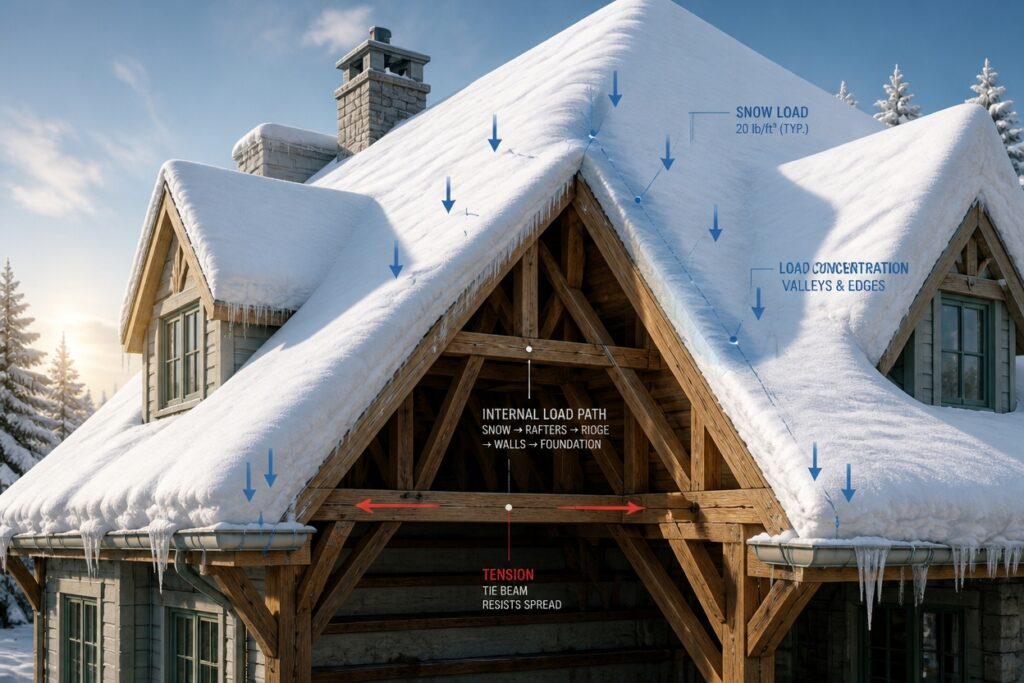
Snow load is simply the weight your roof needs to handle when winter piles on the white stuff. It is measured in pounds per square foot, and those numbers matter more than you might think.
Where you live makes all the difference. Northern states like Minnesota and Colorado typically need roofs built for 50 to 100 PSF. Southern areas often get by with just 20.
These requirements come from years of weather data and local building codes that account for regional climate patterns.
An undersized roof can fail when heavy snow arrives.
Knowing your local requirements helps you plan builds, renovations, or even just understand what your home can handle during a tough winter.
What Is Snow Load and Why It Matters
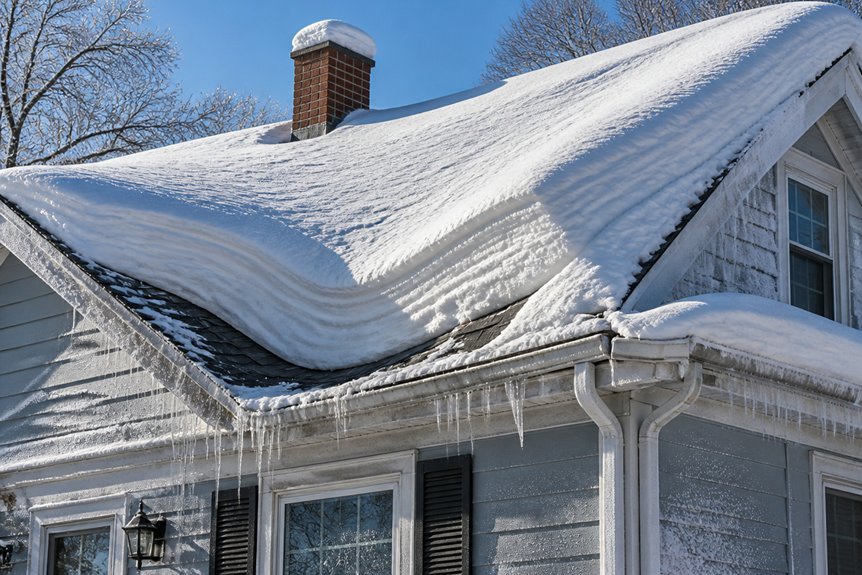
Snow load is simply the weight of snow and ice resting on a roof. Too much of it can damage or even collapse a structure.
Building codes set minimum snow load standards based on where you live. Cold northern states like Minnesota need higher ratings than warmer southern areas.
Several factors affect how much snow your roof can handle. Pitch, design, and materials all play a role. Engineers measure snow load in pounds per square foot. Most regions fall between 20 and 150 PSF.
Knowing your local requirements keeps buildings and people safe. It also helps prevent costly repairs down the road.
How Your Location Determines Your Roof’s Snow Load
Geography shapes how much snow your roof must handle. Northern states like Minnesota and Colorado need stronger roofs than southern regions. Mountain areas face heavier snow than valleys below.
Elevation and location both affect your roof’s requirements. Local building codes set minimum snow loads using historical weather data. These measurements come in pounds per square foot. Coastal and inland areas often have different standards.
Check with your local building department to find your specific requirements. This step protects your home’s structure and keeps you compliant with local rules.
Building Code Standards for Snow Load Requirements by Region
Building codes differ across the United States. Homeowners and builders need to follow their local standards. The International Building Code offers baseline requirements. States and municipalities then adjust these for their conditions.
Snow load ratings vary by climate. Northern regions like Minnesota and Alaska need higher ratings. Some areas require 50 pounds per square foot or more. Southern regions often need only 20 pounds per square foot. Coastal and mountain areas face unique demands too.
Your local building department has exact specifications for your area. Check these requirements before you build. This ensures your roof meets safety standards and follows all regulations.
Snow Load Warning Signs: When Your Roof Is Stressed
Recognizing the physical signs of roof stress from accumulated snow helps homeowners identify potential problems before serious damage occurs.
Sagging roof lines are a clear warning. Visible bending along the roofline also indicates trouble. Cracks in interior walls suggest structural strain from excess weight.
Doors and windows that stick or fail to close properly suggest frame shifting. This happens when snow load pressure affects your home’s structure.
Interior water stains signal potential damage. Ceiling cracks and popping sounds point to stressed structural components. These issues need attention right away.
Gutters pulling away from fascia boards require immediate inspection. Visible gaps between walls and ceilings are equally urgent.
Prompt professional evaluation prevents roof collapse. Don’t wait to address dangerous snow accumulation on your roof.
Emergency Snow Load Management: Removal, Inspection, and Repairs
When Snow Piles Up Fast
Heavy snow puts serious stress on your roof. Act quickly when buildup gets dangerous. This protects your home from structural failure.
Getting Professional Help****
Removal crews bring the right tools for the job. They use roof rakes and snow blowers to clear weight safely. Don’t try to handle deep snow alone.
Checking for Damage****
Look closely at beams, trusses, and supports after snow loads. Watch for sagging or cracks. These warning signs need immediate attention.
Making Repairs****
Strengthen any weak spots you find. Replace materials that have cracked or bent. Quick fixes now prevent bigger problems later.
Timing Your Response
Clear snow during or right after storms when possible. This stops ice from forming underneath. It also reduces the total load faster.
Keeping Records
Take photos of any damage before you clean up. Your insurance company will need these. Good documentation speeds up claims.
Hiring the Right People
Choose contractors with proper certification. They know local codes and safety rules. Quality work protects your investment.
Planning Ahead
Prepare your roof before winter hits. Small maintenance tasks now prevent emergencies. A little effort goes a long way.
Frequently Asked Questions
What Roof Materials Handle Snow Load Better Than Others?
Metal and concrete roofs demonstrate superior snow load capacity compared to asphalt shingles or wood shakes. Their structural rigidity and strength characteristics enable them to withstand heavier accumulated snow masses more effectively.
How Do I Calculate the Snow Load Capacity of My Existing Roof?
One determines roof snow load capacity by consulting structural plans, identifying roof pitch and material type, then cross-referencing local snow load codes. A structural engineer can assess existing conditions and calculate maximum safe weight limits.
Does Homeowners Insurance Cover Snow Load Damage and Removal Costs?
Like a coin with two sides, homeowners insurance typically covers sudden snow damage but rarely removal costs. Coverage depends on the policy and whether damage resulted from negligence or structural failure rather than natural accumulation.
Can I Reinforce My Roof to Handle Heavier Snow Loads?
Yes, homeowners can reinforce roofs through structural upgrades like adding support beams, installing additional trusses, or upgrading to stronger materials. Professional assessment determines feasibility and cost-effectiveness before implementation.
What’s the Difference Between Ground Snow Load and Roof Snow Load?
Ground snow load represents the weight of snow on flat terrain, serving as the foundation’s bedrock for calculations. Roof snow load accounts for factors like slope, wind exposure, and thermal effects that reduce the actual snow burden on pitched surfaces.
Conclusion
Understanding snow load requirements protects roofs like a foundation protects buildings. Homeowners must identify their regional standards, recognize stress warning signs, and maintain regular inspections. Snow load compliance varies by location, influenced by historical weather patterns and building codes. Proper management—including timely removal and repairs—prevents structural failure. Consulting local building officials guarantees compliance, safeguarding both property and occupants from weather-related damage.