
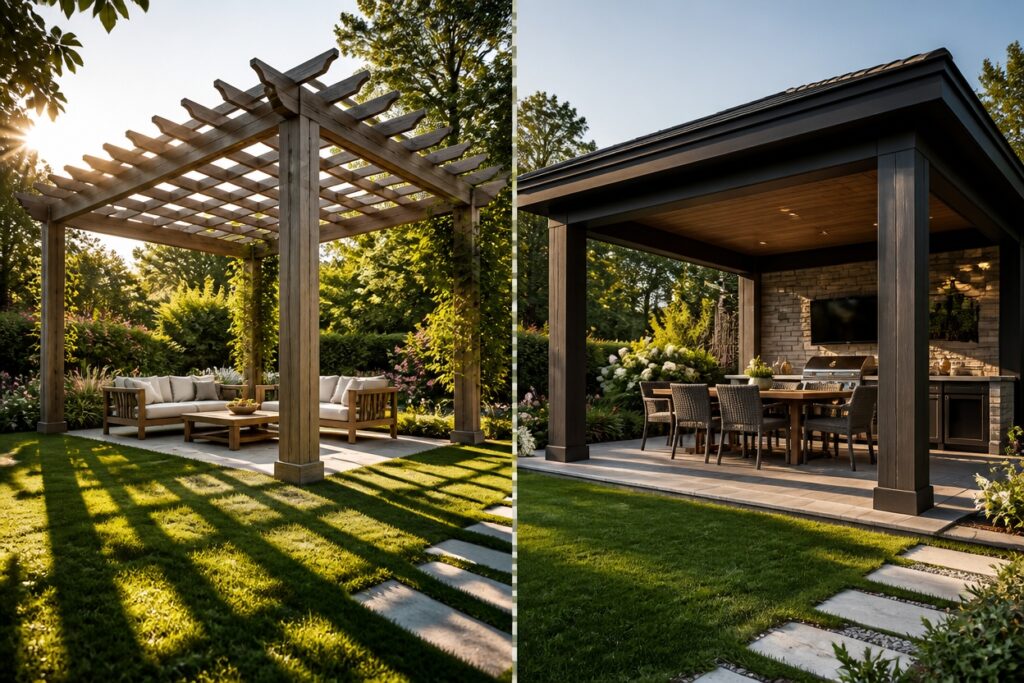
Few backyard decisions feel as personal as choosing between a pergola and a pavilion.
Both structures shape how you actually live outside, yet they serve different moods and moments.
Pergolas invite the sun to filter through. Their open rafters create dappled shade that shifts with the hour, perfect for morning coffee or climbing vines.
Add a pavilion, though, and you get a true outdoor room. Solid roofing means dinner happens rain or shine, and the space feels intentionally finished.
Your climate matters here. So does your budget, and how you picture spending time outside.
The right choice isn’t about following a trend. It’s about matching structure to the life you want in your yard.
Pergolas vs Pavilions: Core Design and Function Differences
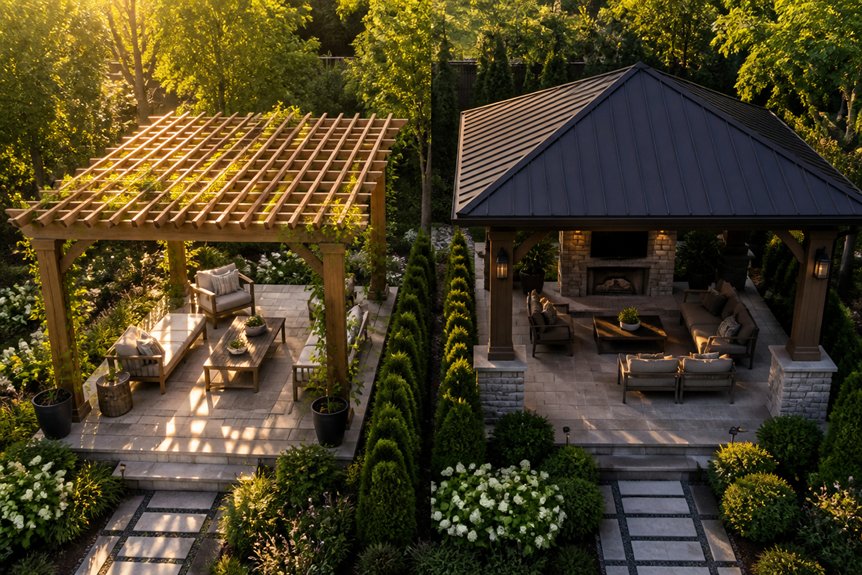
Pergolas and pavilions both enhance outdoor spaces, but they serve different purposes.
Roof Design
Pergolas have open roofs with parallel beams or lattice. Light filters through while offering partial shade. Pavilions feature solid, fully enclosed roofs made from metal or wood shingles. They block rain and harsh sun completely.
Best Uses
Pergolas shine as decorative garden features. They frame walkways beautifully and support climbing vines. Pavilions work better for hosting gatherings. Your guests stay dry and comfortable regardless of weather.
Cost and Upkeep
These structures need different materials and building methods. Pavilions require more complex construction. This affects both your initial budget and long-term maintenance needs.
Shade and Weather Protection: What You Actually Get
Shade and Weather Protection: What You Actually Get
Pergolas offer light, airy coverage. Their open lattice roofs let sunlight stream through. Raindrops pass through too. You get gentle, dappled shade. It works well for plants and brief sun relief.
Pavilions give you solid, reliable shelter. Their roofs block rain, snow, and harsh sun completely. Think of them as open-air rooms. You stay dry and cool underneath. They handle all seasons without worry.
Choose pergolas for mild, pleasant days and garden charm. Pick pavilions when you need real weatherproofing. Extended outdoor living demands the stronger coverage.
Installation Costs: Pergolas and Pavilions Compared
Budget considerations separate these two structures considerably.
Pergolas typically cost between $3,000 and $9,000 installed. The final price depends on size, materials, and complexity. Pavilions range from $5,000 to $15,000 or more. They need stronger foundations, full roofing systems, and extra support beams.
Labor expenses vary by region and contractor rates. Materials also affect your bottom line. Pressure-treated wood costs less than cedar or composite options. Vinyl and aluminum structures come with higher price tags.
Foundation work adds significant expense to pavilions. Permits and inspections increase total project costs too. Homeowners should get multiple quotes before deciding. Pricing fluctuates based on local availability and site conditions.
Pergola or Pavilion Aesthetics: Visual Impact on Your Yard
Visual appeal sets these two structures apart.
Pergolas use open roof designs with evenly spaced slats. These create striped shadow patterns across your yard. The effect adds gentle visual interest without overwhelming the space.
Pavilions feature solid roofs instead. This gives them cleaner, more defined lines. They pair naturally with both traditional and modern home styles.
Pergolas fit beautifully in contemporary landscapes. Their lattice framework feels airy and delicate. Pavilions carry more visual weight. They look substantial and permanent.
Your existing landscape matters when choosing. Consider your home architecture too. Think about how much visual presence you want in your yard. These factors help ensure your new structure enhances your outdoor space.
Best Uses for Pergolas
Best Uses for Pergolas
Pergolas add real value to backyards and gardens. They give climbing plants a place to grow upward. Vines and ivy weave through the slats to cast natural shade below.
Shade and Shelter
Place a pergola over your patio or favorite seating spot. It filters harsh sunlight without blocking the breeze. Garden pathways feel more inviting with this partial cover overhead.
Around Water and Gardens
Homeowners often build pergolas near pools and hot tubs. They mark the transition from lawn to water. Garden beds benefit too, with the structure drawing the eye to your blooms.
Climate-Friendly Design
The open roof lets rain run through and air move freely. This makes pergolas a smart choice for humid areas. You get protection from sun without trapping heat.
Defining Outdoor Spaces
Use a pergola to create outdoor rooms. It separates your dining area from the lawn without walls. The result feels intentional and spacious at the same time.
Visual Appeal
Pergolas frame pretty views and add architectural detail. They cost less than enclosed structures but still elevate your landscape. Simple or ornate, they suit many home styles.
When Pavilions Make More Sense
Pergolas give you partial shade and an open feel. But pavilions shine in different situations.
Pavilions work best when you need full protection. They block rain, sun, and wind completely. Families who host often love the enclosed overhead coverage. The spacious layouts give everyone room to spread out.
Living somewhere with intense weather? Pavilions handle summer storms and harsh sunlight with ease. They shelter larger groups comfortably too. You’ll find plenty of headroom and floor space for all kinds of activities.
Homeowners focused on durability should look at pavilions. These structures protect your furniture, equipment, and guests from the elements. For high-use outdoor spaces, they make a smart, practical investment.
Maintenance and Durability: Pergolas vs Pavilions
After considering protection levels and space requirements, upkeep demands deserve careful attention.
Pergolas require less maintenance overall. They need occasional cleaning and stain reapplication every few years. Their open design allows water drainage. This prevents pooling damage.
Pavilions demand more upkeep due to enclosed roofs. These trap debris and require regular gutter cleaning. Roof inspections are also necessary.
Both structures benefit from wood treatment. This helps resist rot and insects. Vinyl and metal options reduce maintenance considerably compared to wood.
Climate conditions affect durability. Areas with heavy rain or snow stress both structures differently.
Pergola or Pavilion: Which Fits Your Climate and Lifestyle?
Selecting between a pergola and pavilion depends on your local weather and how you plan to use your outdoor space.
Climate Considerations
Pergolas work well in moderate climates. They provide partial shade for Mediterranean or temperate regions. Pavilions suit areas with heavy rain, snow, or intense sun. They offer full coverage you can use year-round.
How You Live Outdoors
Think about your daily activities. Pergolas fit casual entertaining and gardening. Pavilions support frequent gatherings, outdoor kitchens, or extended backyard living.
Budget and Longevity
Pavilions typically cost more upfront. They also deliver greater protection and last longer. Weigh climate severity against your intended use to find your most practical choice.
Frequently Asked Questions
Can I Move a Pergola or Pavilion Once It’s Installed in My Yard?
Moving either structure depends on installation method. Pergolas and pavilions attached to concrete foundations or deeply anchored posts are difficult to relocate. Freestanding models with minimal footings offer greater flexibility for repositioning.
Do I Need Permits or HOA Approval Before Building Either Structure?
Homeowners absolutely must navigate a bureaucratic maze before hammering a single nail. Most jurisdictions demand permits for both structures, while HOAs frequently impose additional restrictions. Local building codes and covenants dictate approval requirements.
What’s the Typical Lifespan of a Pergola Versus a Pavilion?
Pergolas typically last 15-20 years, while pavilions endure 20-30 years. Pavilions’ superior longevity stems from their robust construction, complete roofing, and enhanced weather protection. Both lifespans depend greatly on material quality, maintenance frequency, and climate conditions.
Can I Add Electricity, Lighting, or Plumbing to Either Structure?
Like a blank canvas awaiting an artist’s touch, both structures welcome electrical upgrades. Pavilions more readily accommodate utilities due to their enclosed nature, while pergolas require creative mounting solutions for lighting and minimal plumbing integration.
Are There Financing or Payment Plan Options Available for These Installations?
Most contractors and suppliers offer financing options for backyard installations. Many provide payment plans through third-party lenders, credit cards, or in-house financing. Homeowners should compare interest rates and terms before committing.
Conclusion
Choosing between a pergola and pavilion requires honest assessment of actual needs rather than aesthetic desires. Pergolas suit mild climates and decorative purposes, offering minimal practical protection. Pavilions provide legitimate weather defense and functional gathering space, justifying higher costs for those needing reliable coverage. The “better” structure depends entirely on climate severity, intended use, and budget constraints, not on which option sounds more appealing.